
Residential & commercial garage doors
Your Driveway, Your Control
Coming home shouldn’t mean stopping awkwardly at the roadside while your gate opens. Metro Garage Doors plans automatic driveway gate installation in Fairfax, VA around vehicle access, entrance positioning, and everyday convenience.
An automatic driveway gate should be positioned where vehicles have sufficient room to approach, wait, enter, and exit without interfering with surrounding traffic or pedestrian routes. The appropriate location depends on the property boundary, driveway depth, visibility, ground slope, and gate movement. Local requirements also influence placement.
Imagine turning off the road and waiting for your gate to open. How much of your vehicle remains near the street? Is there a sidewalk crossing the entrance? Can another driver see you clearly? For homeowners planning automatic driveway gate installation in Fairfax, VA, these questions help establish a practical entrance location.
Once you’re through the gate, the driveway still needs to work. You might need to turn toward a side-facing garage, pass a parked car, or continue uphill before reaching the house. The entrance position affects those movements, while automatic gate operation and access options determine how the powered system responds to drivers.
Short driveways create difficult decisions near the street. A gate positioned close to the frontage might leave insufficient space for a vehicle waiting to enter. Roadside landscaping, retaining walls, and visibility obstructions further complicate the approach. The proposed location must also account for sidewalks and any applicable restrictions on the public right-of-way.
Inside the property, parking and turning space matter just as much. Consider a home in Vienna with a driveway that turns sharply toward a side-entry garage. Positioning the gate too far inward might interfere with that turn or eliminate useful parking space. The entrance must accommodate the actual vehicle route, not simply the gate opening.
Homeowners often picture a gate directly across the driveway at the property’s front boundary. That location might work, but it deserves a closer look when a vehicle would have to wait across a sidewalk or extend into the roadway. Metro Garage Doors considers the available driveway depth, expected vehicle length, and surrounding access conditions when evaluating entrance placement.
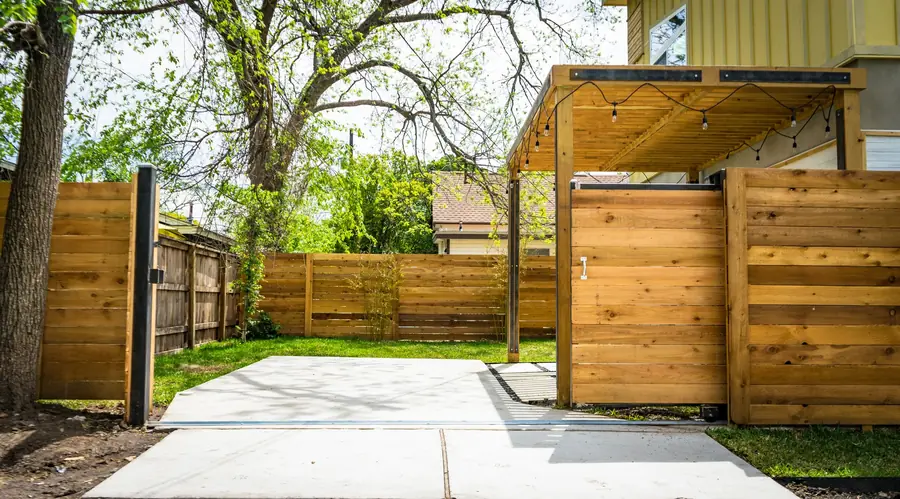
Moving the gate inward creates its own trade-offs. The new position uses driveway space that might otherwise serve parking, turning, or access to the garage. Existing manual gates present another possibility. If the current entrance already accommodates vehicles properly, adding automation to the existing gate may avoid relocating the entire entrance. Your driving method shapes automatic driveway gate installation in Fairfax, VA, from the vehicle’s first stopping position to its movement past the entrance and toward the garage.
Step 1
We review how vehicles enter from the road, where drivers wait for opening, and whether the approach interferes with surrounding traffic or pedestrian access.
Step 2
The intended gate position, movement area, controls, vehicle detection, and protective devices are planned around the property’s driveway arrangement and operating requirements.
Step 3
The selected gate, supporting hardware, compatible operator, and necessary controls are installed according to the approved configuration and applicable equipment requirements.
Step 4
We verify opening and closing movement, intended vehicle access, installed detection equipment, and required safety responses before the entrance enters regular use.
A motor completing its opening cycle doesn’t establish whether the driveway works comfortably for the household. After the gate’s protective functions have been checked, vehicle passage must be considered against the actual entrance layout. The finished arrangement needs adequate waiting space, usable turning clearance, and appropriately positioned controls and detection equipment.
Drivers need a practical stopping position while the gate opens. The arrangement should avoid unnecessary obstruction of the road, sidewalk, or neighboring access points.
The intended vehicles must have sufficient room to pass through the entrance and continue toward parking areas or the garage without striking surrounding structures.
Where installed, vehicle loops or presence detectors must perform their designated functions. They do not replace required entrapment protection around the moving gate.
The operator must follow its programmed closing operation and respond correctly to compatible monitored safety devices, preventing movement that conflicts with identified hazardous areas.
There is no universal setback that suits every residential driveway. The appropriate position depends on vehicle length, available waiting space, property boundaries, road conditions, and applicable local requirements. Fairfax-area properties may also have zoning or right-of-way restrictions affecting improvements. The entrance location should be reviewed before the gate and its controls are installed.
Sloped and curved driveways require careful consideration of vehicle approach angles, gate movement, and ground clearance. A swinging gate might encounter rising pavement, while a sliding arrangement needs suitable support and travel space. The driveway’s actual grade and geometry determine which configuration is practical without interfering with passing vehicles.
The entrance must accommodate the combined vehicle and trailer length, overall width, and turning path. A longer vehicle combination also needs sufficient space to wait while the gate opens. Tight turns may require a wider usable opening or different gate position. Vehicle detection must suit the intended traffic arrangement.
Properties governed by a homeowners association may have architectural rules affecting gate appearance, height, materials, and placement. Approval requirements depend on the community’s governing documents. Local zoning, permitting, and right-of-way requirements are separate considerations. Check the applicable association rules and government requirements before committing to the proposed installation.
Automatic vehicular gates are designed for vehicle traffic, not routine pedestrian passage. Pedestrians need a separate access opening positioned away from hazardous gate movement. That entrance does not necessarily have to sit directly beside the driveway gate. Its location should provide a practical walking route consistent with applicable safety requirements.
Poorly positioned gate equipment can obstruct plowing, collect debris, or interfere with existing drainage paths. Ground clearance, driveway grading, operator placement, and nearby drainage features need consideration. Winter maintenance also affects access to motors and controls. The final layout should preserve the driveway’s intended water runoff and maintenance access.
The best gate location depends on how you enter and leave your property. Tell us about your driveway, parking arrangement, and approach from the road. Call (703) 944-0855 to discuss your entrance.
We’re available 24/7 for your assistance!
Prefer to talk?

A suitable manual entrance might only need compatible powered equipment, provided its structure and movement meet the requirements for safe automated operation.

If the existing gate stops, reverses, or fails to respond, repairing its automatic operating system addresses the fault without automatically requiring another entrance.
Keypads, remotes, intercoms, and vehicle detectors require suitable placement and compatibility with the intended household access and gate operation.

Metro Garage Doors also handles powered entrances for properties with different gate configurations, access requirements, and existing equipment needing installation or service.