
Residential & commercial garage doors
Keep Loading Bays Accessible
What happened the last time the door worked? That detail matters before anyone touches the controls. We handle commercial overhead door repair in Fairfax, VA by investigating failures and addressing damaged equipment.
Stop operating a commercial overhead door if it jams, drops unexpectedly, develops a pronounced tilt, or shows damaged lifting hardware. Keep people and vehicles away from the affected opening. A technician needs to establish whether the door remains safely supported before attempting movement or corrective work.
A warehouse door might operate normally for weeks before failing during an ordinary opening cycle. Staff may remember a loud noise, a sudden change in movement, or the operator stopping without warning. Those details help narrow the investigation. The important question is what changed immediately before the door stopped working.
The failure might involve the lifting assembly, a damaged section, an obstruction, or the powered operator. Some problems occur without an obviously broken component. A facility with several affected openings may need different commercial overhead door servicing and repair work at each one, depending on the equipment involved and its condition.
The person who last operated the door often has information that cannot be established from its resting position. A snapping noise, an unexpected jolt, or a section catching against the frame helps identify where to investigate. These observations do not establish the cause, but they provide a useful record of the failure.
At a hypothetical storage facility along Columbia Pike in Annandale, staff might report that a warehouse door closed normally during the morning but stopped partway through its next opening. For commercial overhead door repair in Fairfax, VA, information about the last successful cycle, unusual sounds, and visible changes helps direct the inspection without unnecessary operating attempts.
A commercial sectional door contains heavy moving parts supported by a counterbalance assembly. When a cable, spring, or supporting component fails, the door’s weight may no longer be controlled as intended. Pulling the hand chain, disconnecting the operator, or attempting another powered cycle without assessing the condition can create additional hazards.
The immediate task is establishing whether the assembly is stable enough for inspection. Damaged lifting components require qualified handling. If the problem involves a confirmed spring failure, replacement of the commercial overhead door’s counterbalance springs becomes a specialized part of the repair rather than an ordinary adjustment to the operator.
Step 1
The affected door is kept out of operation while its position, visible damage, and surrounding hazards are reviewed. Access is restricted where necessary.
Step 2
Before disturbed components are handled, the door’s stability and support conditions are assessed using appropriate professional procedures and equipment.
Step 3
The identified faults are corrected using suitable replacement components or approved repairs. Related hardware is checked where the failure has affected adjoining parts.
Step 4
After mechanical work is completed, the door’s movement, operator response, and applicable protective functions are tested before it returns to regular use.
Completing a repair involves establishing that the door is adequately supported, moves through its intended travel, and operates with functioning controls and required protective devices. A successful commercial overhead door repair in Fairfax, VA must address the original fault and any connected damage found during inspection.
A stopped overhead door should not be treated as a machine that simply needs restarting. The repair sequence depends on its current position, the condition of its lifting hardware, and whether components have shifted or broken. A damaged section does not automatically require an entirely new door. Where suitable components are available, replacement of individual commercial door panels may address localized damage. Extensive deterioration or incompatible components require a different assessment.
Lift cables, drums, counterbalance hardware, and associated attachments need to remain correctly assembled and capable of supporting the door during its intended operation.
Rollers, hinges, tracks, and door sections must remain properly guided without binding, twisting, or contacting damaged supporting hardware during travel.
Powered controls must perform their intended functions without forcing a mechanically defective door. Applicable safety devices require appropriate testing after corrective work.
The completed work should identify corrected faults, replaced components, and any remaining conditions requiring attention, allowing facility staff to understand the door's service status.
A hand chain is not a safe workaround when the door’s mechanical condition is unknown. Broken counterbalance components, displaced cables, or jammed sections can make manual movement hazardous. Employees should stop operating the door and arrange a qualified assessment. Manual operation is appropriate only when the equipment is confirmed suitable, and the manufacturer’s procedures are followed.
Temporary securing arrangements depend on the door’s position, structural condition, and available equipment. A qualified technician must determine whether the opening can be secured without creating another hazard. An unstable door should not be propped up or restrained using improvised materials. Temporary protection does not establish that the damaged door is safe to operate.
A sudden bang often raises concern about the counterbalance assembly, but it does not confirm a broken spring. A cable failure, damaged bracket, shifted hardware, or another mechanical event may produce a similar noise. Inspecting the lifting components and related attachments establishes which part failed and whether connected components were damaged.
A door may appear intact while experiencing an operator fault, internal drive failure, worn connection, or counterbalance problem. Certain defects remain concealed behind covers or within supporting assemblies. Visible condition alone does not establish safe operation. A qualified inspection considers the equipment’s mechanical behavior, connections, and applicable protective functions before the door returns to use.
Missing identification makes replacement-part selection harder but does not automatically prevent repairs. Technicians can document dimensions, hardware configurations, and available manufacturer markings to help identify compatible components. Certain older or discontinued assemblies may lack suitable replacement parts. Unverified substitutions are inappropriate where dimensions, loading requirements, or manufacturer compatibility affect safe operation.
Photographs can help communicate visible damage, door position, operator labels, and surrounding conditions. Take them only from a safe location outside the affected door’s movement and hazard areas. Avoid approaching loose cables, suspended sections, or unstable brackets for a closer picture. A written description remains useful when photography would require unsafe access.
When you contact Metro Garage Doors, identify the affected opening, its current position, and anything unusual staff heard or observed. Call (703) 944-0855 to discuss the necessary inspection and repair. For commercial facilities, select your service location from our coverage areas:
We’re available 24/7 for your assistance!
Prefer to talk?
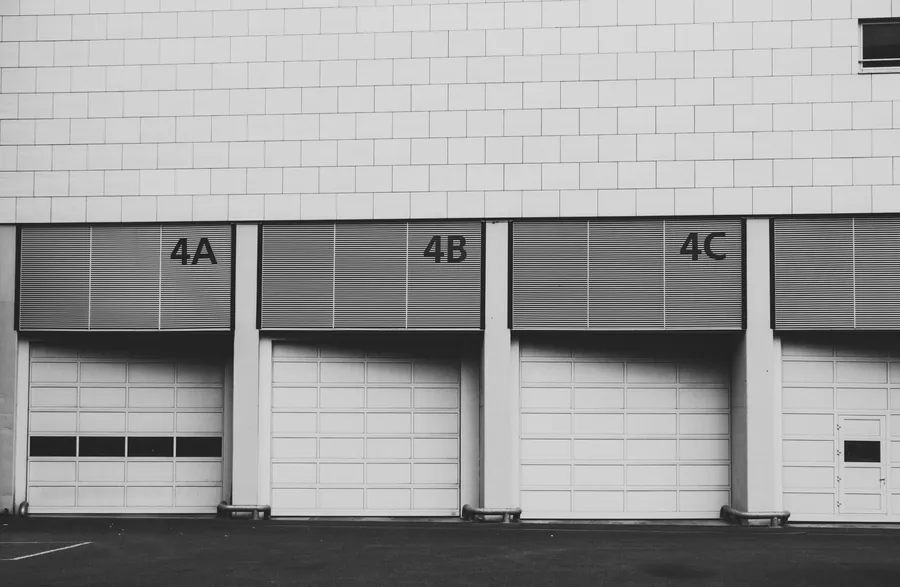
Extensive structural damage or unavailable compatible parts may justify installation of a replacement commercial overhead door instead of repeated repairs to an unsuitable assembly.
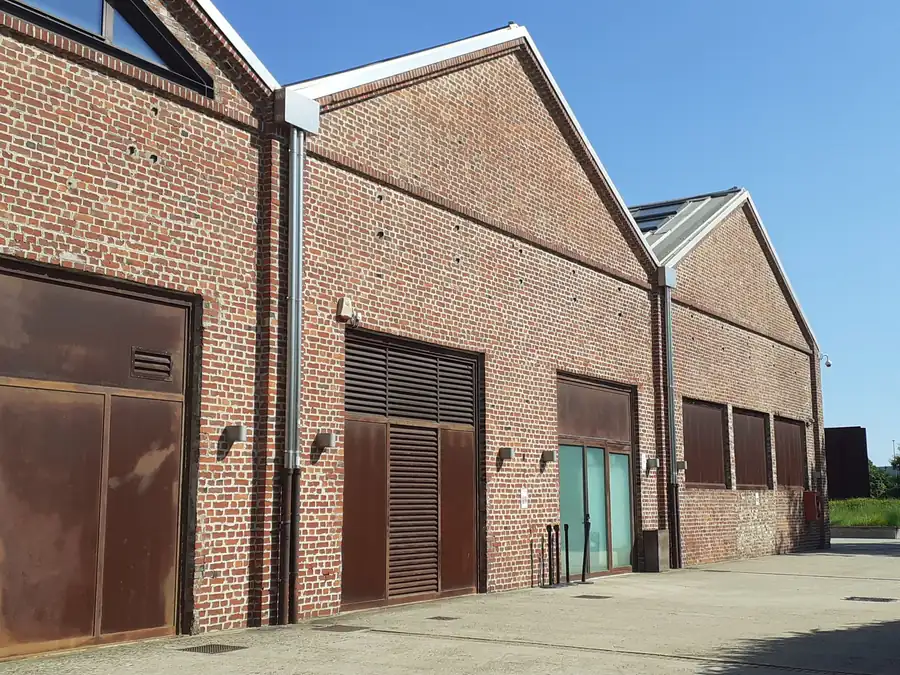
Businesses with sectional doors in vehicle garages can arrange repair work for commercial garage door systems involving defective operators, tracks, rollers, or lifting hardware.
Facilities with frequently operated openings can arrange scheduled checks of commercial garage door components to identify wear before another operating failure develops.
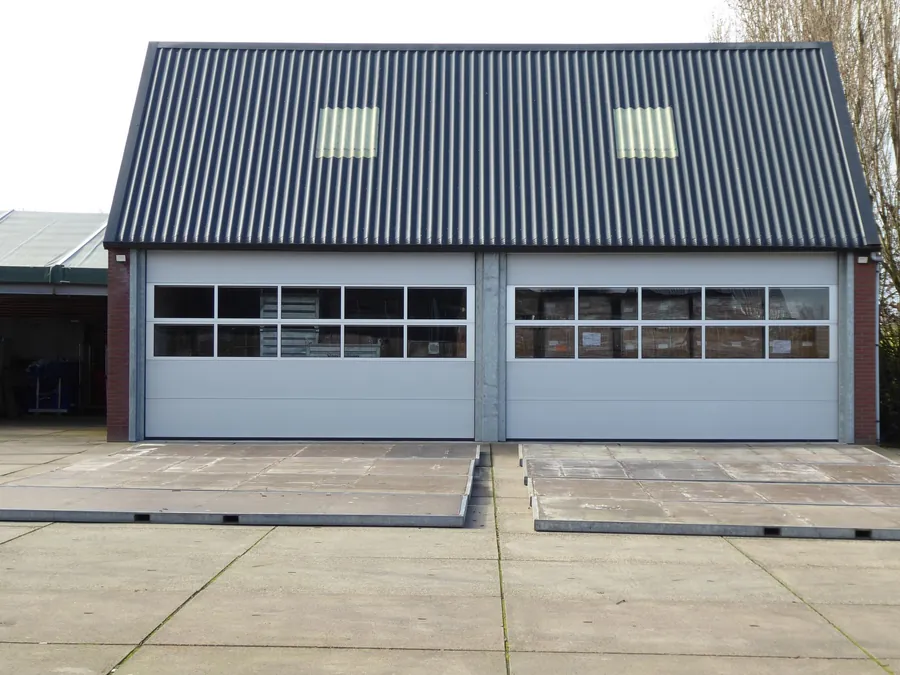
Certain failures require specific repairs involving springs, cables, hinges, sections, or operator connections. The affected assembly determines which components require corrective work.